

Bringing guided affirmations in-app
Migrated a costly WhatsApp pilot into a habit-forming daily ritual within the app.
- My role
- Product manager, UI/UX designer
- Team
- Engineering, marketing, ops
- Launch timeline
- Redesign June 2025, WhatsApp closed Aug 2025
- Result timeline
- Results measured Oct 2025
One affirmation a day, kept calm
A one-off WhatsApp intervention became a guided in-app experience designed to make daily mental-health support easier to start and stick with.
A free daily habit that replaced a paid one
WhatsApp spend, down from ₹2L+ a year
Day-1 retention (relative)
favourites
of WhatsApp users moved in-app
What shipped
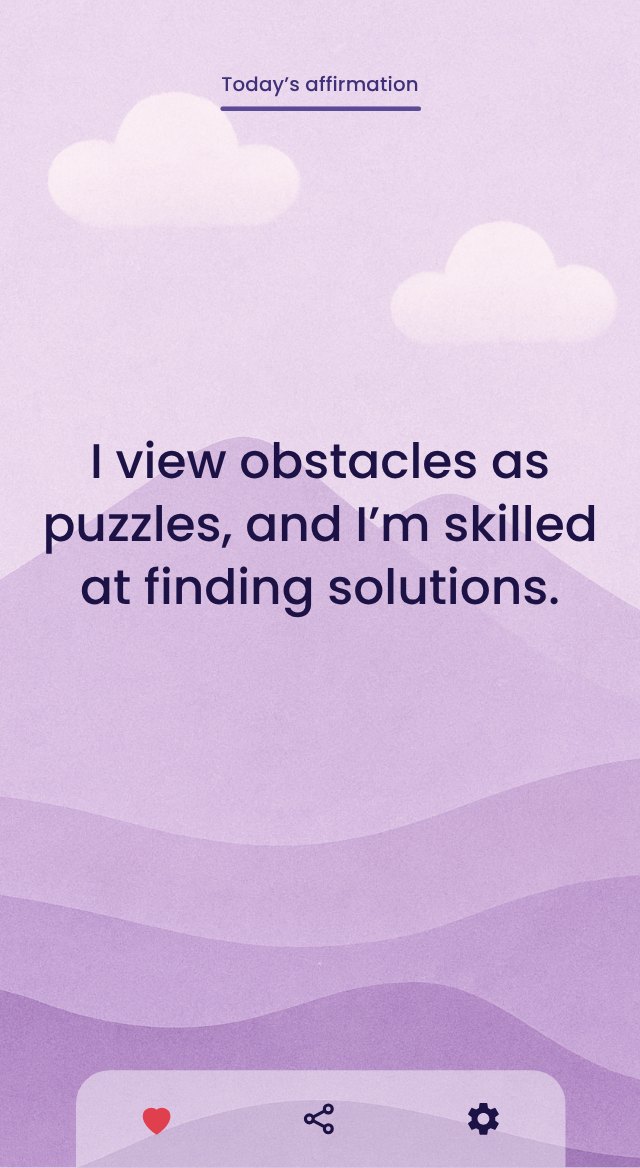
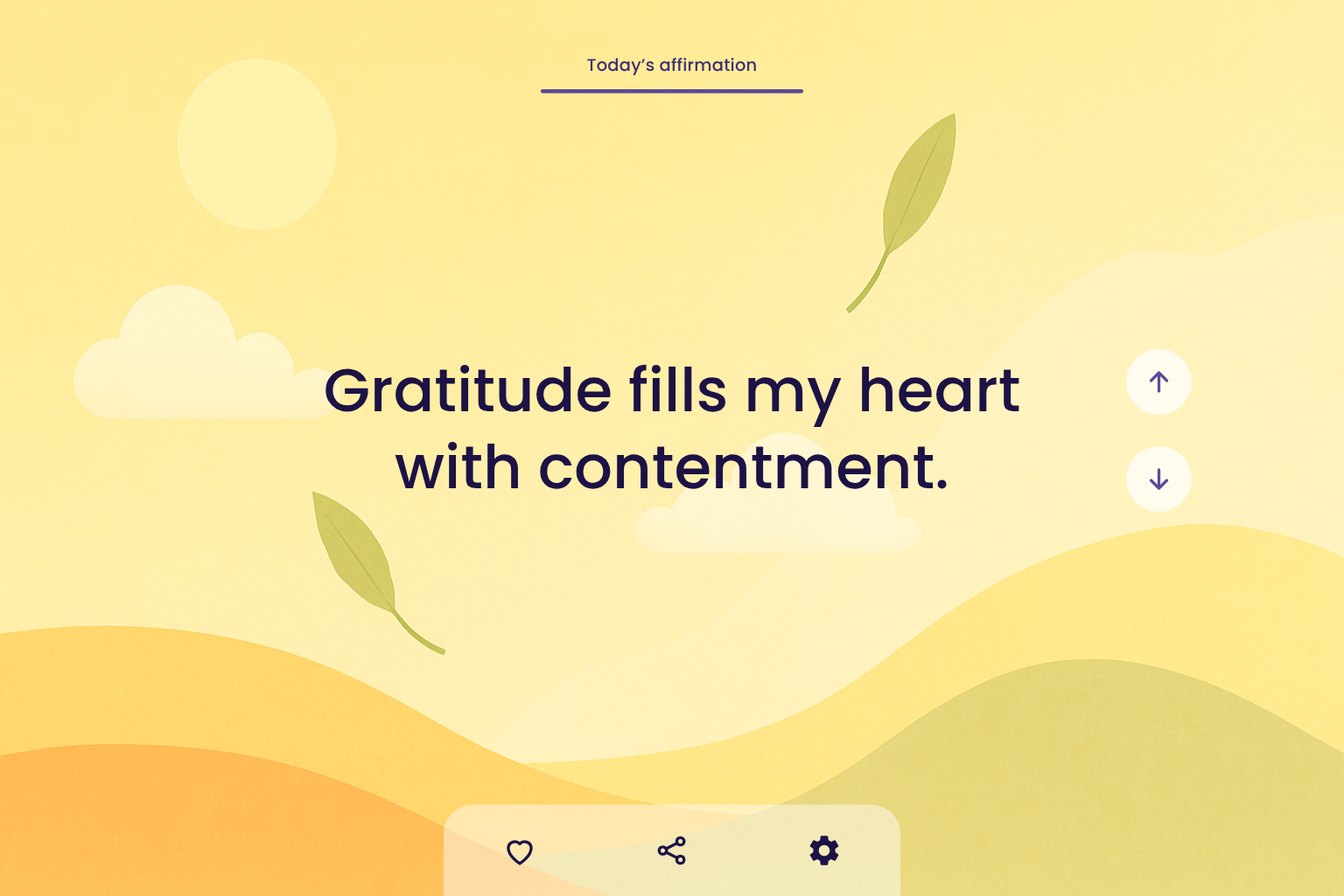
The daily affirmation on mobile and desktop. The rest of the page goes in close.
Loved, but only for a day
Affirmations had quietly become a loved feature. The WhatsApp pilot showed surprising demand, but it felt flat and one-time: people binged several at once and rarely returned.
monthly WhatsApp users
messages sent
read rate
a year, about ₹21,900 a month
A survey of 204 subscribers rated it 8/10 on "would recommend". But it came with a ₹2.6L annual bill and little control over the experience.
Business impact
Moving affirmations in-app would cut recurring costs, increase DAU and strengthen retention, all tied to enterprise renewals and upsell.
User impact
People could build a reliable daily ritual: something calming, always available, that supports them in small but meaningful ways every day.
Young professionals, open to micro-habits
Most sessions came from people aged 21–30. By 2024, corporates made up 45% of platform usage, so a low-barrier daily ritual was a corporate-friendly way in.
Four things that weren't working
We analysed data and spoke with counsellors. These themes came up.
Retention was weak
Early-day return rates stayed in single digits (around 10% on Day 1).
Content felt static
No pacing or habit reinforcement.
WhatsApp was unsustainable
The cost, plus user journeys outside our ecosystem.
Moving without losing people
Asking subscribers to switch risked the habit we were trying to keep.
What the data said
Five findings shaped everything that followed.
Users fell off fast
Around 10% on day 1, then under 6% by day 7.
Retention here means the share of people who came back on a given day after first using Affirmations, from Day 1 through Day 10.
Afternoon is heavy, morning is the gap
Around half of all sessions happen during afternoon work and study hours, while mornings were lighter. That reinforced our hunch: use affirmations to fill the morning gap with a calming ritual.
People wanted something new each day, not a library
Counsellors confirmed affirmations were a "quick emotional win". The audience was young, time-poor and ready for something that takes seconds.
New users came once. WhatsApp users kept the habit
In its first three months (Dec 2024 to Mar 2025), about 1,500 people used the first in-app version, viewing around 21,000 affirmations. But 73% of new users came on only one day. People who had moved over from WhatsApp behaved differently: fewer one-day visits and more favourites saved (5.3 each against 3.9).
The habit existed, but the app wasn't building it for newcomers.
In-app opens already peaked in the morning
Even before the redesign, opens in the app peaked between 7:30 and 8:30 AM, which confirmed the morning was the moment to design for.
In-app affirmation opens by hour, Dec 2024 to Mar 2025.
From moving a feature to designing a ritual
We gathered the core team, with me playing the hybrid role of product manager and designer, including Engineering and Marketing, and asked one question.
The brief
"Move Affirmations from WhatsApp into the app."- Treats it as a channel switch
- Success means users arrive
- Says nothing about why they'd stay
The reframe
"How do we turn affirmations into a daily ritual without losing users in transition?"- Treats it as a habit
- Success means users come back
- Protects people through the move
Four moments in a day, from waking up to winding down

Before and after journey
What success looked like
Clear goals and success metrics, set before design started.
Migrate
of WhatsApp users to the app, which is +436 of 1,092.
Day-1 retention
up from 9.8% to 11.7%, and +10% by Day 10 (relative).
WhatsApp cost
within 2 weeks of phase-out.
Sharing
a sign the content felt worth passing on.
Favourites
a sign people wanted to keep what they read.
Support corporate adoption
Corporates reached 45% of platform usage by 2024, so affirmations were an easy, low-barrier way in.
Starting out
Who did what, and what I did before drawing anything.
Product
- Set goals and success metrics
- Wrote the PRD and user-state journeys
- Ran the data analysis and counsellor conversations
Design
- Explored layouts and chose one
- Designed the daily unlock, backgrounds and favourites
- Wrote the notification and exit copy, signed off by Marketing
Engineering & marketing
- Engineering: feasibility for daily timers, deep linking and safe migration; daily reset logic and storage
- Marketing and ops: message templates
Competitor scan
I compared five affirmation apps feature by feature. Most had reminders and favourites. What stood out was what nobody had.
Survey and user interviews
Counsellors confirmed affirmations were a "quick emotional win", but users wanted something new each day, not a library. The survey of 204 subscribers said the same thing in numbers. The highlighted bar is the top answer to each question.
What would you enjoy most on this platform?
What kind of content uplifts you most on tough days?
When are you most likely to check in?
What's one feeling you'd like us to help with more often?
What would you love as a gentle nudge?
Engineering input
Early feasibility check with engineers on three things.
Scoped the daily reset logic and storage with engineers.
Engineering built the deep links. I made sure the journey worked whether or not the user was signed in.
Ran the app alongside WhatsApp with a gentle 10-day exit.
Four layouts, one decision each
I mapped content, habit loop, visuals, interaction and ecosystem, then tested four ways to present an affirmation.


Four layouts, side by side
Stacked
Invites flipping for a better one
Card style
Invites flipping for a better one
Single page
Prevents doom swiping, keeps focus on one
Chat style
A back and forth doesn't fit one message a day
Why single page won
It prevents doom swiping and keeps people focused on one affirmation. Stacked and card layouts feel like a social feed, so people keep flipping for a better one instead of absorbing the one in front of them.
Explored, then parked
Four principles
Rules I held myself to when a decision got hard.
One a day, not a library
Scarcity makes each one count, and prevents bingeing.
Calm, not gamified
Rewarding to save, never a score to chase.
Make it theirs
Favourites and backgrounds let people own it.
Nudge, don't pressure
Reminders invite. They never scold.
One affirmation a day, kept calm
Five decisions, each with the reasoning behind it.
A new affirmation each morning
One new affirmation unlocks each morning, and everything unlocked so far stays in your library.
- One-a-day pacing prevents bingeing
- It becomes a 5–7 second micro-routine
- Scoped daily reset logic and storage with engineers
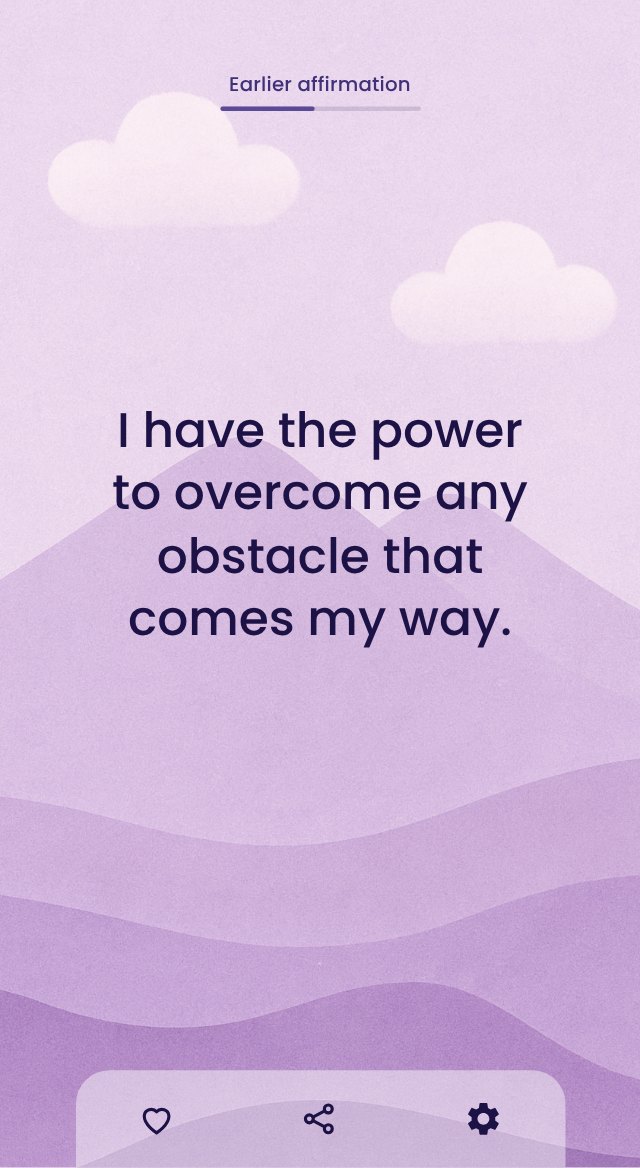
Saving that feels rewarding, not gamified
A favourite micro-animation makes saving feel good without turning it into a score.
- One tap to save
- Easy to find again
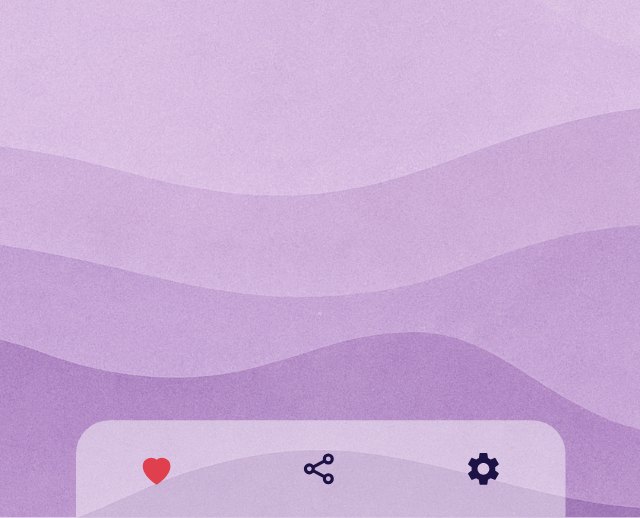
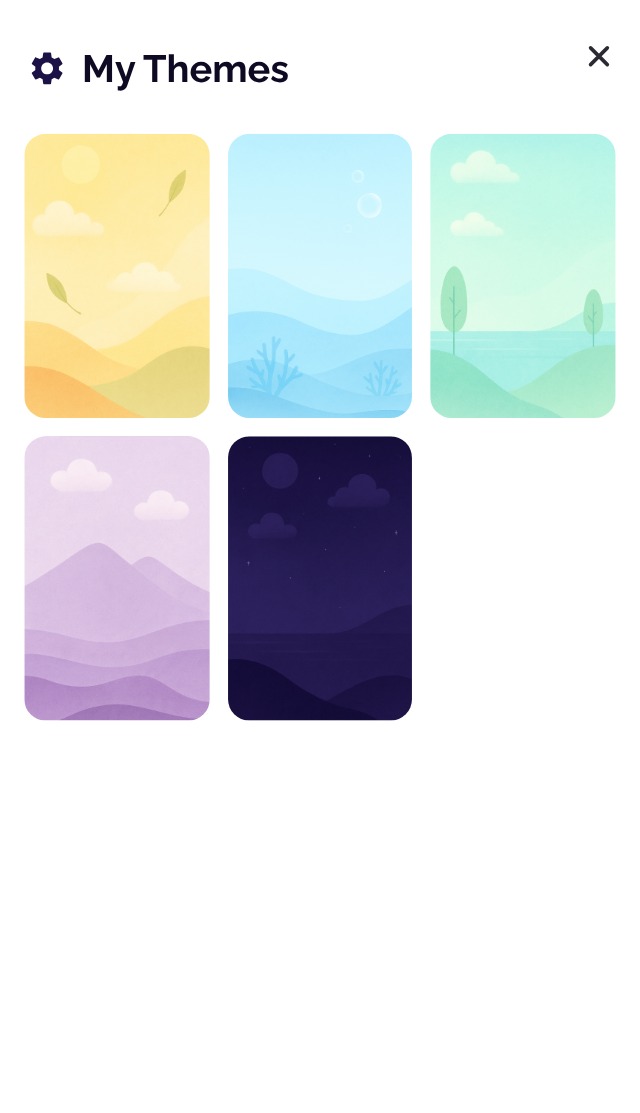
Backgrounds that feel calm and intentional
We explored calming backgrounds and typography, and kept it minimal to avoid cognitive load. I illustrated them myself.
- Five themes in My Themes: mint, sky, lavender, sunlit and a night mode
- Never distracting
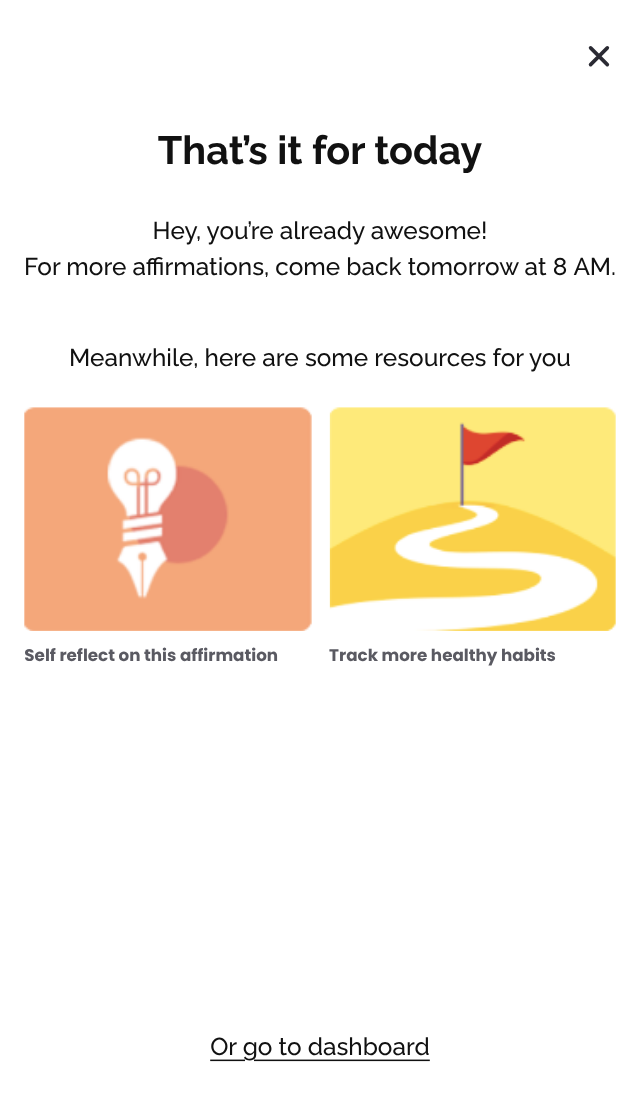
A gentle next step
When the daily read is complete, a popup suggests one or two related resources, such as the journal or the mood tracker.
- Connects Affirmations to the wider platform
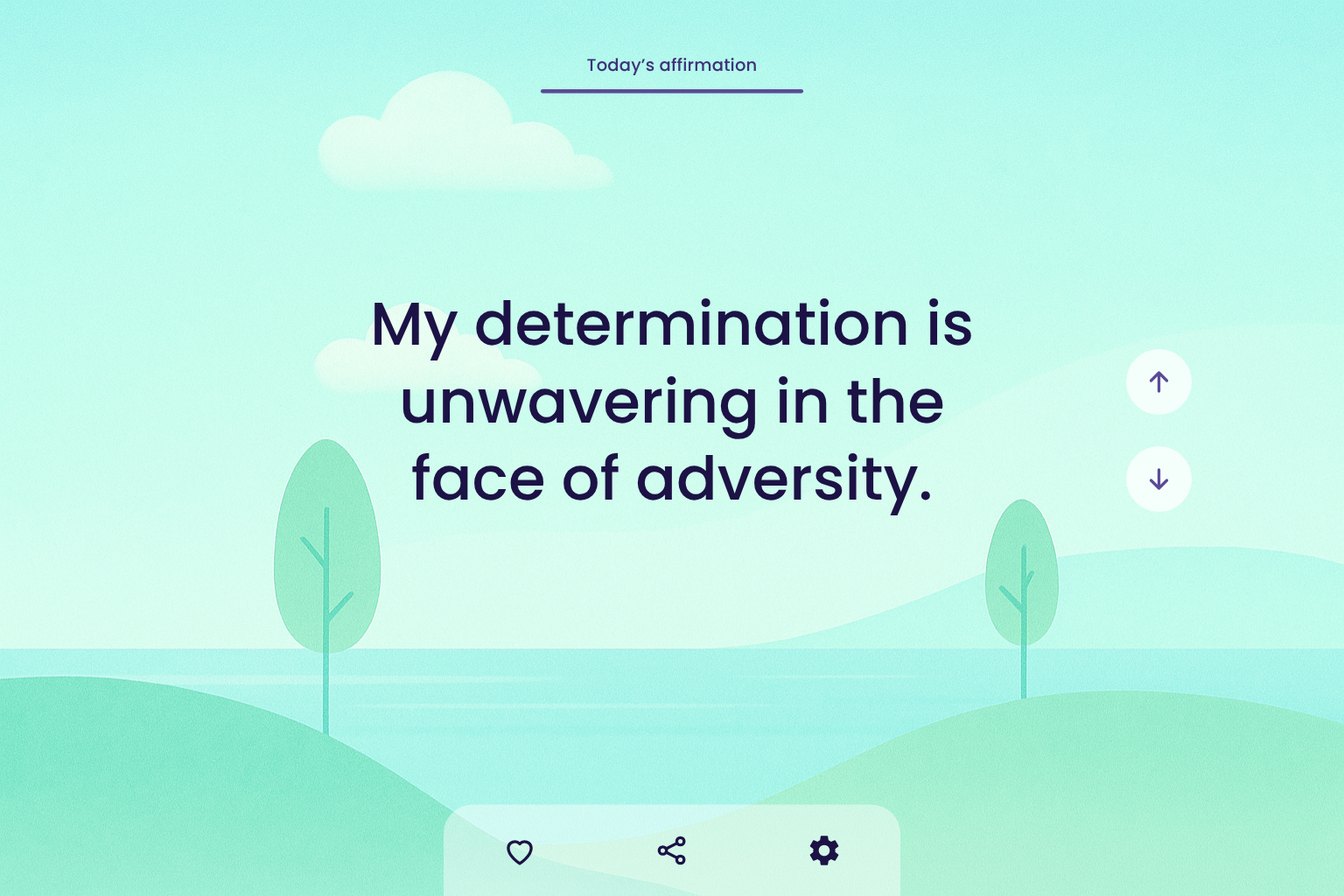
One visual language
The old UI was static lists. The new one feels like a calming ritual, and desktop and mobile share the same language: space, backgrounds, subtle animation.
What I specified
The PRD covered how the app behaves for each kind of user, and the daily unlock was the rule at its centre.
First-time, not subscribed
Five sample affirmations, then a subscribe card on the sixth. People feel the product before being asked for anything.
Subscribes on the sixth card
Ten more affirmations unlock. The sixteenth card tells them to come back at 8 AM.
Existing WhatsApp subscriber
Receives 15 new affirmations, with the app running in parallel to WhatsApp during the move.
New subscriber
Gets the app experience only, with no WhatsApp. Sharing works through WhatsApp, Instagram and mail.
Phase 2, and how we'd measure it
Personalisation with backgrounds and category filters. Favourites ("My Favorites") were already in Phase 1.
Measured by subscription conversion after the sixth card, favourites usage and next-day retention.
The rule, what resets it, and how people get pulled back
The rule
One new affirmation unlocks each morning. Miss a day and earlier ones stay in the library to scroll back to.
The reset
Unlocks at 8 AM in the user's own time. Reset logic and storage were scoped with engineers.
The deep link
A push notification opens straight to today's card. Engineering built the links, and I made sure the journey was complete whether or not the user was signed in.
Interaction sequence
Open → today's card → read → favourite or share → related-resource popup → "come back tomorrow at 8 AM". Miss a day and you can scroll back through earlier ones.
The daily unlock, as a state flow
Leaving WhatsApp, and bringing people back
This was sensitive, since users loved the familiarity. We created a 10-day exit plan with messages at T-10, T-5, T-1 and T-0, gentle reminders and value pitches, ending with a message that celebrated the journey and linked to the platform. Scroll sideways. Send times varied on purpose: these were reminders timed for the best chance people would open and act, not just read.
Bringing people back
I wrote the copy and Marketing signed it off. Marketing and ops handled the templates, and Engineering built the deep links.
Where the team pushed back
The concerns that changed my design.
Engineering · timing
Scoped the daily reset logic and storage with engineers, and cut further customisation to hit the timeline.
Engineering · deep links
Engineering built the links. I made sure the journey was complete whether or not the user was signed in: signed-in users land straight on the affirmation, and everyone else gets a sign-in popup at the Affirmations section on the homepage.
Migration risk
Ran the app alongside WhatsApp and built a gentle 10-day exit, with Marketing and ops owning the templates.
₹2.6L to zero, and a daily habit
Two months after WhatsApp closed: what hit, what fell short, and the honest read.
WhatsApp spend
Day-1 retention (relative)
peak opens, subscribers only
favourites
| Metric | Target | Actual | |
|---|---|---|---|
| WhatsApp cost | ₹0 in 2 weeks | ₹0 | Hit |
| Migration | >40% | 35% at shutdown, ~39% a week later | Nearly |
| Day-1 retention | +20% | At least +10% (relative) on the 9.8% baseline | Half |
| Favourites | +5% | +8% | Beat |
| Shares | +5% | +2% | Missed |
| Daily opens | none set | Peaked at 36% in the first days (subscribers only), then settled around 20% | Strong |
Costs: WhatsApp spend went from ₹2.6L a year to ₹0, and the habit moved with it.
Migration: nearly 35% by shutdown, rising to about 39% the week after, as people went looking for their morning affirmation.
Retention (all users): Day-1 retention improved at least 10% (relative) on the 9.8% baseline, half our goal.
Favourites: +8% against a +5% target. People were making it their own, and choosing to favourite.
Daily opens (subscribers only): peaked at 36% in the first days, then settled around 20%.
“I used to feel anxious when I would wake up, confused about how I will manage my tasks. When I subscribed for Affirmations, before talking to any person, I would open the message and feel a little more positive. I feel happier and more confident..”
Anonymous user“It has helped me to not be afraid of the things life puts me through.”
Anonymous user“Had zero energy to go for work, but affirmations started a positive chain of thoughts, that felt different, eventually it made me more enthusiastic for the day.. Thank you.”
Anonymous user“1 single line made me rethink a challenge as an opportunity.”
Anonymous user“Daily affirmations helped me to remain positive. Whenever I feel low, I read them.”
Anonymous user“This gives a little push in the morning!”
Anonymous user“Helped me undertake a few responsibilities which otherwise due to some doubt or overthinking, wouldn’t be possible. A sense of confidence..”
Anonymous userKey takeaway
Affirmations evolved from a costly, one-time feature into a daily ritual: a calming, habit-forming experience that lives inside the platform, not outside it.
It also proved a pattern: we could bring a YourDOST programme fully in-app and keep the habit, which opened the way to bringing Stepathon in-app next.
Business punchline
Migrating off WhatsApp eliminated recurring costs, lifted daily engagement, and provided richer retention data to share with corporates. With corporates now 45% of platform adoption, affirmations became not just a perk, but a preventive wellness lever for retention and renewals.
User punchline
Positioned for the core 21–30 demographic, affirmations turned into a meaningful micro-habit that fit their daily rhythm: morning unlocks, afternoon nudges, and preventive care woven into everyday life.
What I'd do differently
Looking back with what I know now.
Sharing missed its target
Sharing sat in the action bar rather than at the moment people felt something. I'd test a share prompt right after a favourite.
Retention reached half its goal
People who brought the WhatsApp habit kept it, but most new users still came only once. Next I'd design specifically for the first three days: what brings someone back on Day 2.
Measure the outcome, not just the habit
Engagement showed people came back. Next I'd check whether regular users saw better subjective unit of wellness (SUW) scores, with counsellors still leading the clinical side.